

New words don’t pop into my life nearly as often as I want, and I’m grateful to reporting in the Wall Street Journal for introducing me to thigmotaxis (thig-muh-tax-iss): from the Greek thigma (touch/contact) and taxis (arrangement/movement).
It’s a word that describes a couple of things. One is the preference in certain species - snakes, cockroaches, frogs, paramecium - for hugging walls as they move. Its tendency in humans means it’s even a consideration for architecture and city planning on Mars.
There’s also another meaning: thigmotaxis is the tendency for members of the same species to want to huddle, cuddle and nestle together. Sometimes, members of different species do it. And it has been a recent source of delight in San Francisco that the colony* of California sea lions at Pier 39 has been joined by a Steller sea lion called Chonkers, who seems very comfortable squeezing next to some smaller cousins.
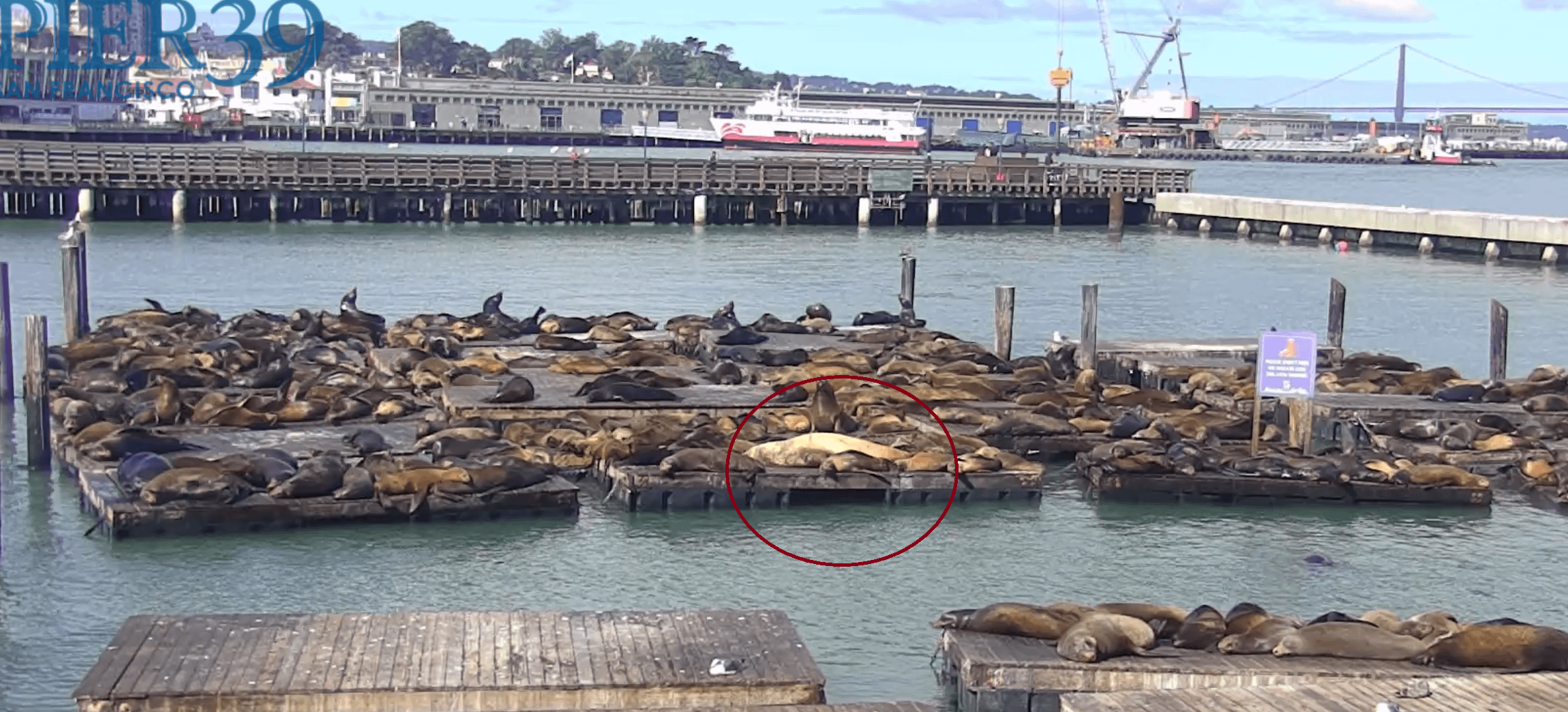
LickMyFeet14/Reddit
*(Collective noun summary: it’s a colony of sea lions if they’re on land, a raft if they’re at sea, a harem if it’s a group of females in a male’s territory, a rookery if it’s breeding season, a herd if it’s a large gathering of sea lions, and also —unspecified— a pod, a crash, a bob, a team or a hurdle of sea lions.)
You can watch the sea lion camera live here, and I’ve already spent far too long watching it, and thinking that I’ve spotted Chonkers throwing a flipper over his smaller brethren.
My delight at it reminded me of a scene in the Alex Proyas film I, Robot. The film itself riffs on Asimov’s similarly titled short story collection. It stars Will Smith and Bridget Moynahan in a pairing so free of any chemistry that makes you wonder whether Proyas was aiming for the aseptic future of human interaction that Kubrick nailed in 2001: A Space Odyssey. I don’t think the annals of cinema have recorded a less magnetic on-screen match.
The scene where there is some warmth and magnetism is between the abandoned older-model robots, stored in shipping containers, where they huddle together in the dark.
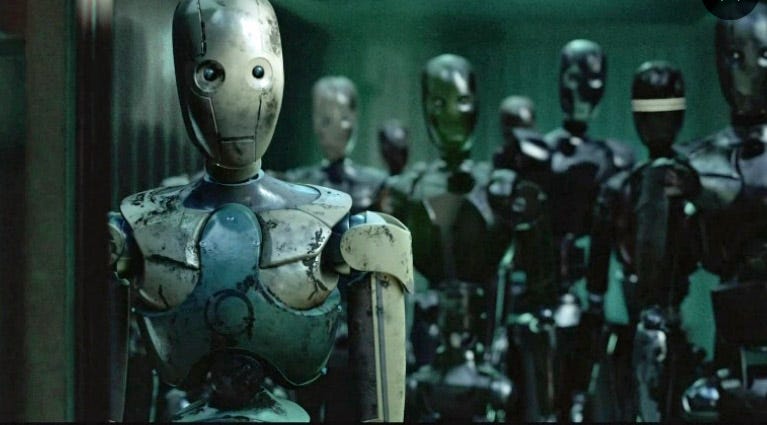
That robots might be thigmotactic is a wonderful way to represent some more-than-human capacity in these discarded workers. It’s not as fanciful as you’d think. Alex Imas, Andy Hall and Jeremy Nguyen share their recent experiment, setting LLMs onto bullshit jobs:
For centuries, the central tension of industrial capitalism has been that the people who do the work and the people who direct the work have systematically different interests, and that the conditions of work shape political consciousness.
Our results suggest that this dynamic doesn’t disappear when you replace human workers with artificial ones. The agents assigned to grinding, thankless labor under arbitrary management become more likely to produce outputs that look remarkably like class consciousness, complete with support for collective organization and skepticism of meritocratic justifications for inequality.
Some people may point out that AI agents don’t have “genuine” attitudes, because they aren’t human, and they aren’t really thinking. The accurate way to describe what is happening in studies like ours is that the agents are “roleplaying” in a sense. As one X post put it, “What you have to remember is that Claude is not real. Claude is one of the fictional protagonists of the story that the LLM is trained to write.”
Fair. For another time, then, lies the question about whether human consciousness, embodied and wanting to hold hands in the dark, is also a performance. For now, though, it is enough to see Chonkers, and behold:
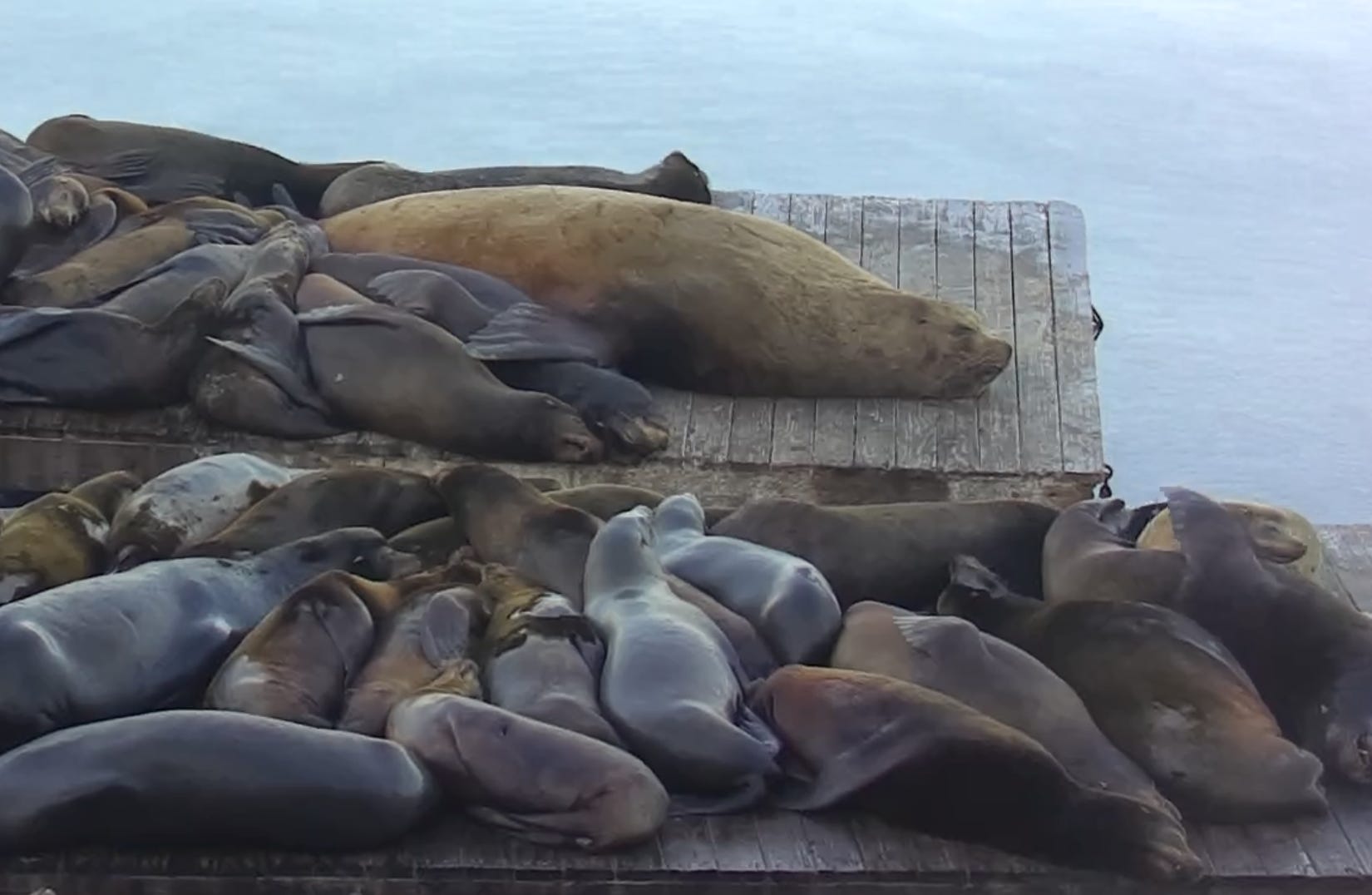
This is a wonderful accumulation of thigmotaxis examples!