

If you came of age in Britain when there were three channels, you know the Doctor Who theme, and the legend of the BBC Radiophonic Workshop where that eerie glissando was made.
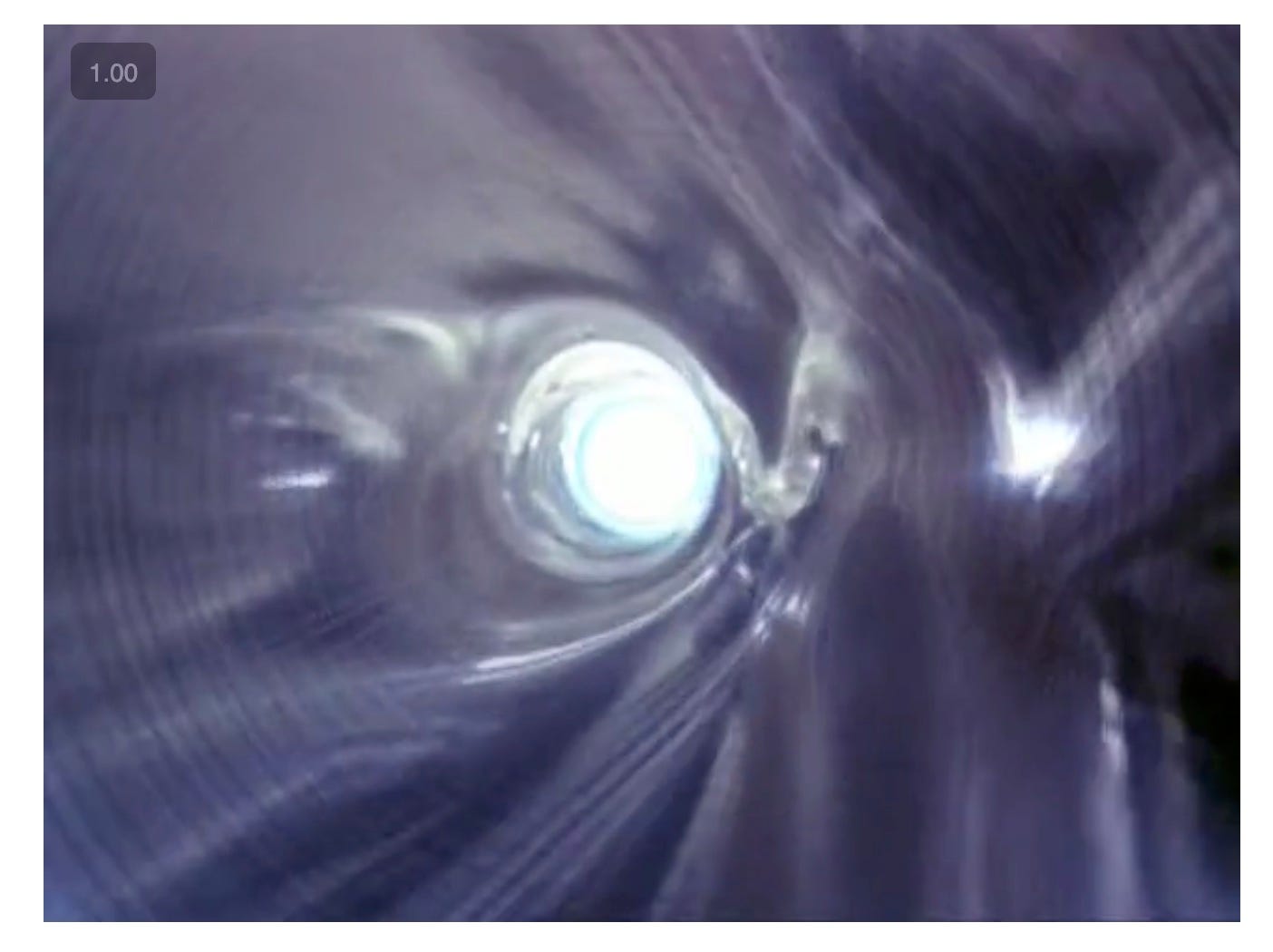
A still from the 1970s early Tom Baker era Dr Who title sequence. What does this sound like?
If you came of age in Britain when there were three channels, you also know that the most terrifying sound is an air raid siren. It portended nuclear holocaust, certain death for those within the blast radius, and the slower agonies of radiation sickness for those of us living in the zone 4.

r/damnthatsinteresting
The two sounds are linked.
The BBC Radiophonic workshop was a place where women turned the sounds of war into the sounds of the future. Delia Derbyshire realized and arranged the Doctor Who soundtrack using musique concrète. She was able to do that because the BBC Radiophonic Workshop had been co-founded in 1958 by a composer named Daphne Oram.
Oram’s entire relationship to electronic sound began with the air raid siren.
Oram joined the BBC in 1942, at seventeen. She’d been offered a place at the Royal College of Music but turned it down for a job as a junior studio engineer — a “music balancer.” One of her duties was to shadow live concerts with a pre-recorded backup, so that the broadcast could continue uninterrupted if the building was hit. Daphne Oram sat in a studio, ready to swap the living for the recorded, while sirens sounded overhead.
The siren isn’t music, but it behaves like it. Oram heard it differently. She started experimenting with tape recorders after hours, cutting, splicing, looping, slowing, reversing. She metabolised the raw material of emergency into something else.
I started drafting this post before the bombs started to fall in the Middle East.
I grew up in London in the 1970s and 1980s, and I knew the siren as the end of days, an augur of nuclear holocaust. We had plenty of ways to die as children. There were the I.R.A. bombings, though the Irish Republican Army usually called ahead with warnings — a practice that, whatever its limits, acknowledged the existence of civilians.As the bombs drop on Iran, it’s worth contrasting the IRA with the US and Israeli militaries, who are racking up the death of children across the Middle East.
Oram has an Iranian-born artistic heir. Shiva Feshareki is a British-Iranian composer and turntablist, who spent years inside Oram’s legacy as part of her doctoral research. In 2016, she performed Oram’s Still Point — a piece for turntables and double orchestra, written in the 1940s, rejected by the BBC, lost in Oram’s notes, and unheard for seventy years. Two years later, Feshareki performed the revised version at the BBC Proms, hosted by the same institution that had once refused to play Oram’s music.
Feshareki’s Turning Worlds, her EP, contains a live track that grows from the same soil as Oram’s wartime experiments. It begins with a siren, and transmutes it. The rising tone, the sense of a frequency testing for the edge of what a room can hold. In Feshareki’s hands, the annihilation becomes exploration. It is neither pretty nor reassuring. But it is unmistakably an act of making, not destroying.
Feshareki didn’t set out to heal a Cold War child’s nightmares. She set out to find what was inside the sound. But the effect is the same. The siren is no longer only the siren.
Oram wrote a book in 1971 called An Individual Note of Music, Sound and Electronics.
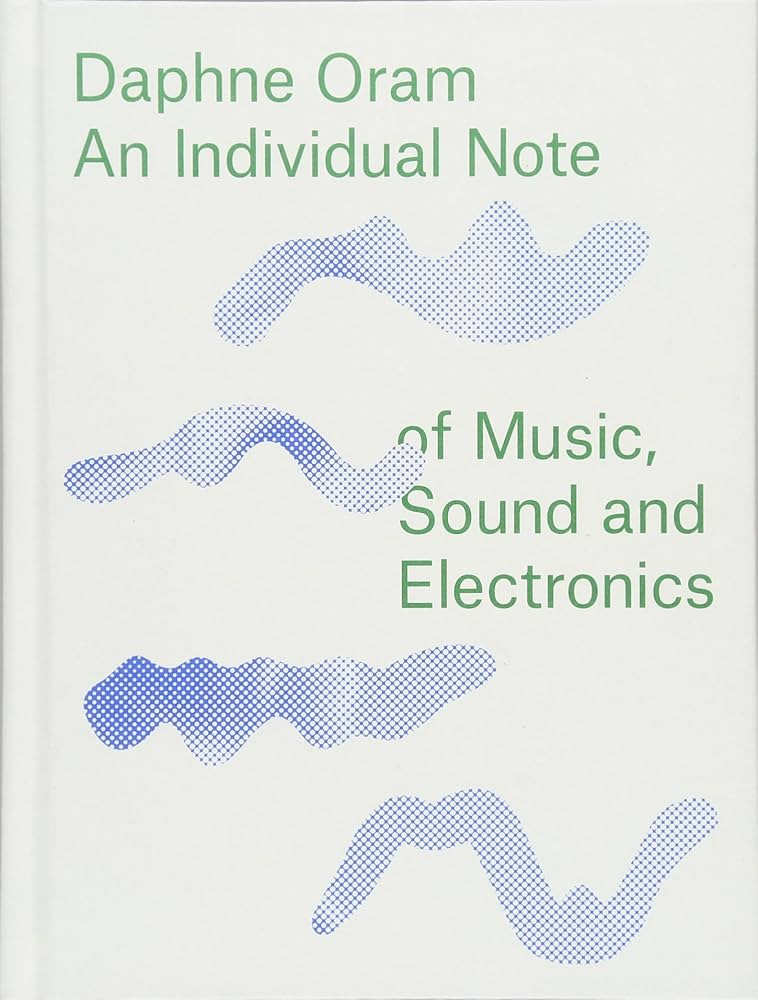
I’ll write more about the book, and about my listening session with Graham Reynolds, next month. For now, one observation: she wrote in 1971 that music was capable of growing into unpredictable forms. She was right. But seeds cannot grow in scorched earth.
The siren is still rising. The wailing—the literal, physical destruction of bodies and heritage—has to stop. We cannot keep asking artists to transmute imperial wreckage. It is time to end the wars that provide the sirens, so we can finally hear what lies on the other side of the silence.
The echo isn’t enough. We need the air to stay still.
We do need the air to stay still.