

When we were in our twenties, Naomi Klein and Avi Lewis insured my life. I was a graduate student in Zimbabwe and I was worried about being detained by the government, they recorded a video to release in the event of my arrest. Emboldened, I managed not only to support some excellent organising work there, but to get out by the skin of my teeth. I’ll always be in their debt, but that’s not why you should subscribe to Patterns, Naomi’s new Substack (or, if you’re Canadian, join the NDP under Avi’s leadership). Sign up because you know you’re going to find a platform for incisive analysis, vital political connection, and beautiful writing. Exhibit A below. So subscribe and — as a bonus — get an early sense of Naomi and Astra Taylor’s new book, End Times Fascism.
Everyone Has A Right To Cool...In This Heat
Neighbours Save Each Other’s Lives, Bad Landlords Don’t Care if You Cook Alive–and Other Lessons From Past Heat Domes
Naomi Klein and Centre for Climate Justice
Jul 23, 2026
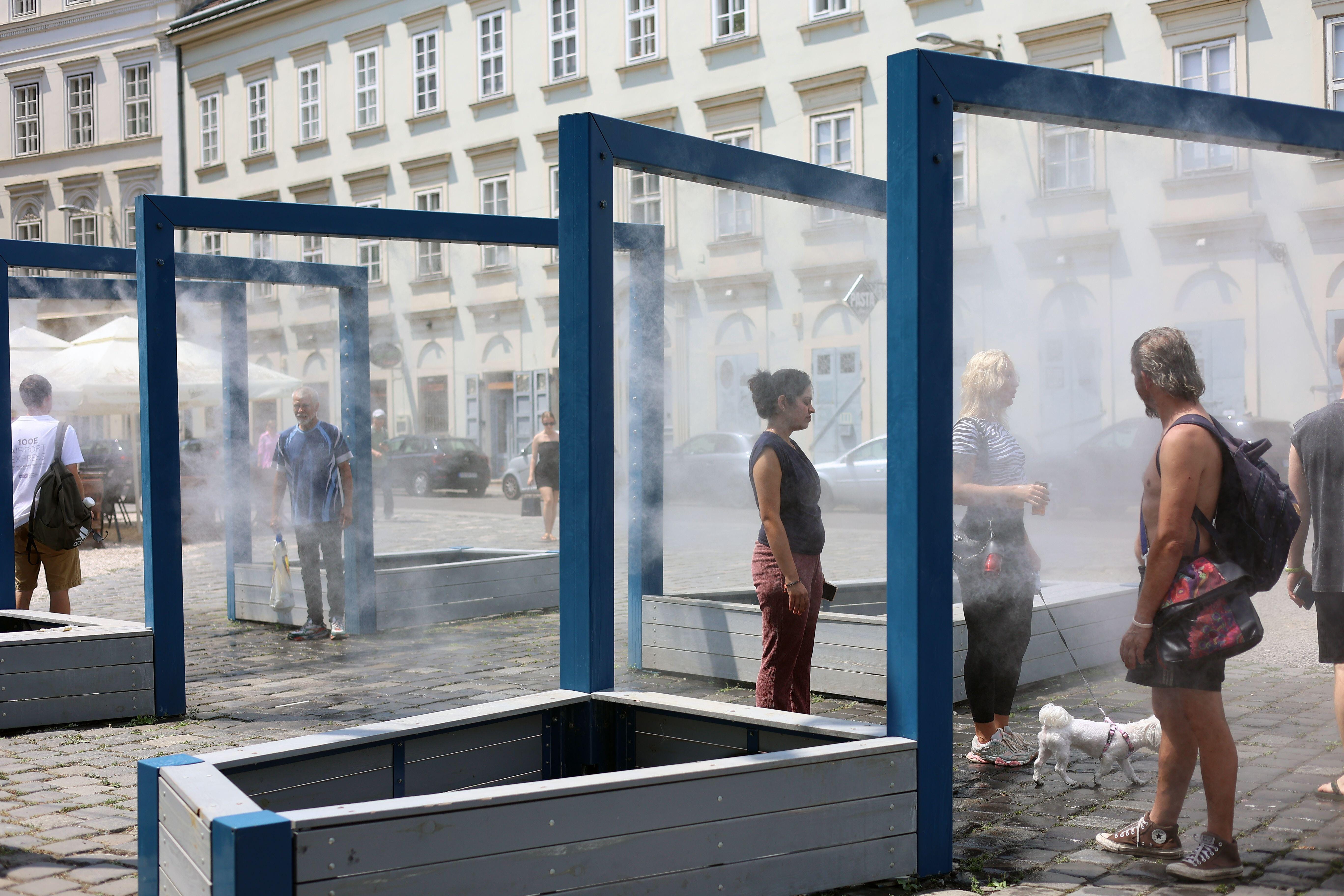
It’s mid-July, and Canada is battling another severe wildfire season, with close to one thousand fires blazing across the country. Northwestern Ontario has been among the hardest-hit regions, where fires are forcing highway closures and cutting off ground transport to remote communities. As we have all seen and heard, smoke from the fires has drifted deep into the United States, darkening skies in cities like Toronto, Boston, and New York. Trump has responded by slapping tariffs on hockey sticks and all kinds of other goods — but, notable, not on oil or gas.
While Trump blows smoke, the people bearing the brunt of the infernos are the ones who have done the least to cause them, and have often been among those sounding the alarm about unsustainable extraction. Namaygoosisagagun (Collins) First Nation, north of Thunder Bay, was largely destroyed in under an hour when a fast-moving fire jumped natural fire breaks, forcing residents to flee by boat. Within a week, a second community, Whitewater Lake First Nation, was similarly ravaged. Ontario officials estimate more than 1,600 First Nations residents have been displaced this season.
There are always multiple causes for wildfires, but beneath them all are the record-breaking temperatures. The same temperature trends that have already brought deadly heat domes this summer to France, Britain and Spain, and to large parts of the East and Central United States. The heat is now making its way to the West Coast, expected to center on the Rockies, where some daily records are likely to be tied or broken and a handful of locations could come within a few degrees of all-time highs.
As climate breakdown accelerates, and heat domes become ho-hum features of summer weather forecasts, we are told that we must learn to adapt. I don’t know about you, but my news feed is crowded with content on how to “beat the heat”–from DIY air conditioners using a Styrofoam cooler with frozen water bottles and dryer vents, to painting your windows with a kilogram of yogurt. Some of the tips are helpful, but the underlying message is not: saving yourself and your family is your responsibility, and yours alone.
Here in British Columbia, where I live and work, we know something about heat domes. We just marked the five-year anniversary of one that parked over us in 2021 and killed more than 600 people dead, making it the deadliest weather event in Canadian history. This experience has taught us that while individual advice on staying cool is critical, it’s just not going to cut it as our planet warms.
People die in heat domes not only because they don’t know how to stay cool, but because they simply cannot. Sometimes that’s because their landlords won’t let them install an air-con unit; sometimes it’s because they can’t physically get to a cooling station because they are not accessible; other times, the barriers have to do with language or reasonable safety fears. In my day job at the University of British Columbia, where I helped found and co-lead the Centre for Climate Justice (CCJ), the intersection of heat and inequality has been a major area of study for us. We work in a beautiful city that is also outrageously expensive and unequal, so we have gone deep on the ways that climate events impact housing security and tenant rights.
This week, I’m delighted to share an in-depth conversation with one of my closest academic colleagues, Dr. Mohammed Rafi Arefin, an Associate Professor of Geography at the University of British Columbia. He is a leading expert on housing and heat and co-leads a large international research project examining concrete policy measures that can save lives when indoor temperatures soar. The research examines everything from the consequences of extreme and prolonged heat inside Vancouver’s Single Occupancy Room Hotels–one of the last rungs of affordable housing–to what it would mean to enshrine a “Right to Cool” that includes everyone, without exception.
Arefin and the CCJ housing research group, which is co-led by our wonderful colleagues Dr. Liv Yoon and Dr. Geraldine Pratt, have distilled their learnings down to 5 big takeaways. They take a little more effort to implement than staying hydrated (do that too!), but if we took them seriously, many more of our friends and neighbours would be safe.
Lesson 1. Climate justice starts at home
Heat is transforming the home, changing it from a refuge to a site of struggle, injury, and even death. It is already a frontline of climate disasters, so it’s also where many solutions must begin.
Lesson 2. Community saves lives
A time-tested principle from tenant organizing works for heat too: know your neighbors. It could help you survive the next heatwave and maybe organize for better housing at the same time.
Most cities open up cooling centers during periods of extreme heat, but for these centres to be effective, we need to meet people where they are. For many reasons, including language and disability, people can’t always make it to official cooling centres. That means we need to cool people where they are.
Lesson 3. Tenant protections are climate protections.
Green retrofits and rules setting a maximum allowable indoor temperature are needed. However, without stronger tenant protections, well-intended climate protections can allow landlords to raise rents and kick lower income tenants out.
Lesson 4. Green homes without tenant rights are climate gentrification.
We are barreling down a path where new buildings are cooled, and the existing apartments where working-class tenants live are unbearably hot. We need protections that will keep people in their homes while greening their homes and making them more affordable.
Lesson 5. Everyone has a right to cool.
We can strive for a universal and enforceable standard for cooling. To do so, we must struggle against what Jeff Goodell has called the new American inequality:the divide between “The Cooled vs. The Cooked.” In truth, we do not have to choose between affordability and habitability.
Why? As we know, the oil and gas corporations that created this crisis are swimming in profits, especially since the U.S. and Israel began their war with Iran. What we need is a windfall tax and the political will to enforce it. That’s how to pay for green, cool homes that are affordable to all.
Here’s a video of my full conversation with Dr. Mohammed Rafi Arefi:
If you want to go deeper, the Centre for Climate Justice produced a report on the Right to Cool framework, with detailed policy recommendations based on extensive on-the-ground interviews from people impacted during the BC heat dome.
It’s not just North America that has been in the throes of heat, of course. In the U.K., where most houses are not insulated well enough to keep out heat and only around 5 percent of homes have air conditioning, endured its hottest day in May on record in London, with temperatures spiking to 34.8 degrees Celsius. It broke the previous record by 2 degrees Celsius or 3.6 degrees Fahrenheit. Usually heat records are broken by only fractions of a degree.
I spoke with Novara Media about the record-breaking heat dome, and about how the broader climate crisis is now intersecting with increasingly fascist politics.
If this conversation was interesting to you and you live in the UK, until the 24th of July, you can pre-order End Times Fascism at Waterstones and receive a 25% discount using the code SUMMER2026.
Here’s the link to the Waterstones product page.
I also spoke recently at a virtual event celebrating DeSmog’s incredible 20 years of muck-racking on this topic. I focused on the rise of the AI-fossil fuel axis and the resurgence of fascism and why it’s time to update our mental models about climate denial. I shared a clip last week, but here’s my full interview:
Patterns by Naomi Klein is a reader-supported publication. To receive new posts, support my work, and the people that make this happen, consider becoming a free or paid subscriber.