
In Praise of Green Economic Populism
William Morris, indigo, and two-and-three-quarters cheers for the latest from the Climate and Community Institute

There is, to use Nick Saul's phrase, a dignified emergency among the working class. William Morris knew this phrase's constituent parts. In 1882, he identified the signature of civilization — machines for commerce and engines for war — and what it neglects:
But, on the other hand, matters for the carrying on of a dignified daily life, that life of mutual trust, forbearance, and help, which is the only real life of thinking men - these things the civilized world makes ill, and even increasingly worse and worse.
Into this emergency comes a report worth your attention.
Yesterday, the Climate and Community Institute released “Stop Greed, Build Green: A Working Class Climate Agenda,” and it’s a compelling agenda for climate politics. You can find it at stopgreedbuildgreen.org.
Full disclosure: I’m on the advisory board, and deeply respect the Climate and Community team. And I fully approve of their nomenclature. It’s Green Economic Populism. The word “populism” is spot on. Theirs is a political argument about who the economy should serve, and who’s currently in the way — the fossil fuel executives, tech barons, and corporate landlords the report names directly.
The core insight is simple. The climate crisis and the cost-of-living crisis aren’t separate problems. They share causes — an economy organized around extracting short-term returns from housing, energy, and transportation at the expense of the people who depend on them — and they share solutions.
What makes the report particularly compelling is that it’s not a hypothesis in search of evidence. It cites proof that this politics already wins. Zohran Mamdani ran on fast and free buses and green social housing and became mayor of New York City. In Georgia, two new public service commissioners trounced an incumbent by campaigning on lower utility bills and clean energy.
In Independence, Missouri, tenants went on an eight-month rent strike and won electric HVAC systems to replace their gas boilers. In Chicago, the teachers’ union ratified a contract that includes heat pump installations.
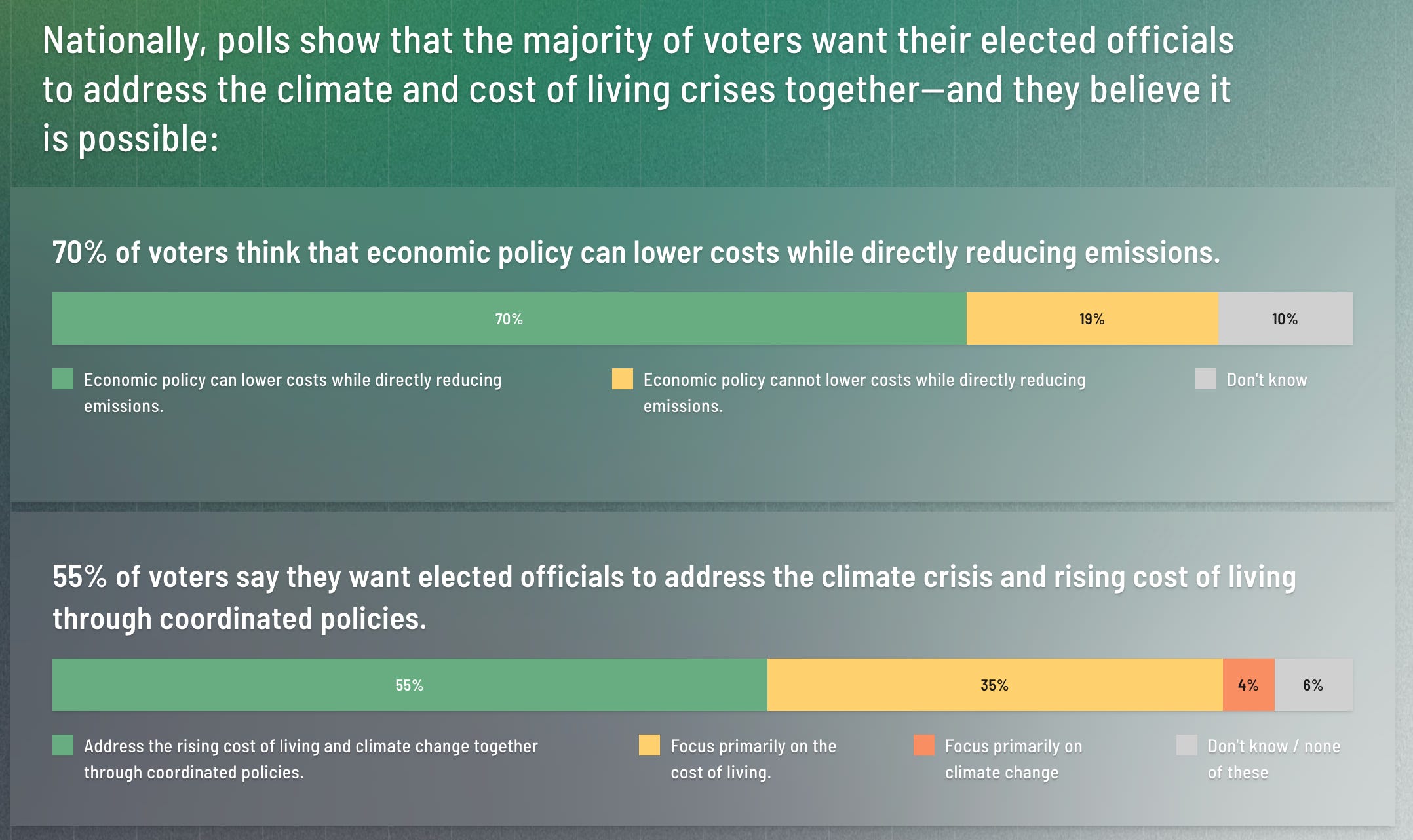
Seventy percent of voters — including sixty-five percent of Republicans — believe that economic policy can lower costs while directly reducing emissions. The constituency already exists. What’s been missing is the political framework to activate it.
Read it. It’s excellent. And I have one quarrel with it, which I’ll make through Morris.
Morris wrote about dignified daily life while his hands were stained blue with indigo. He perfected the indigo discharge printing technique at his Merton Abbey works — careful, handcrafted, worker-centered production, exactly the kind of dignified labor his socialism demanded. One of his most famous textiles, Strawberry Thief, was the first successful result: a pattern of thrushes stealing fruit from a kitchen garden, rendered in deep indigo blue.

Strawberry Thief, 1883, William Morris (1834-1896) V&A Museum no. T.586-1919
Where did the indigo come from? Bengal. Where the British East India Company had built one of the most brutal extraction systems in colonial history. Bengali peasants were forced to grow indigo instead of food crops, paid below market rates, trapped in debt bondage, and beaten if they refused. The Indigo Commission of 1860 heard testimony from a British magistrate that “not a chest of indigo reached England without being stained with human blood”. The revolt against this system — the Nil Bidroha of 1859 — was, at its heart, a food sovereignty movement: peasants refusing to grow a cash crop for export and demanding the right to grow rice.
Morris’s socialism stopped at the waterline. He could see the degradation of dignified daily life in England with deep clarity, and he built an alternative at Merton Abbey that remains genuinely inspiring. But the blue that made it all possible was produced by making dignified daily life impossible for people he never saw. The strawberry thief is empire.
The CCI report is vastly more internationalist than Morris. But it shares a version of this blind spot. Green Economic Populism is strongest on energy, housing, and transportation — the domestic infrastructure of dignified daily life. Food systems get mentioned but don’t get the attention they deserve.
The politics of food — from SNAP cuts to corporate concentration in meatpacking to the climate vulnerability of farmworkers to the global supply chains that connect what Americans eat to how land is used from the Cerrado to the Punjab — is exactly the terrain where the cost-of-living crisis and the climate crisis collide most visibly in people’s daily lives. After all, eight out of the ten lowest paid jobs in the US are in the food system. The effects are horrific, with a spike in deaths from malnutrition since 2008.
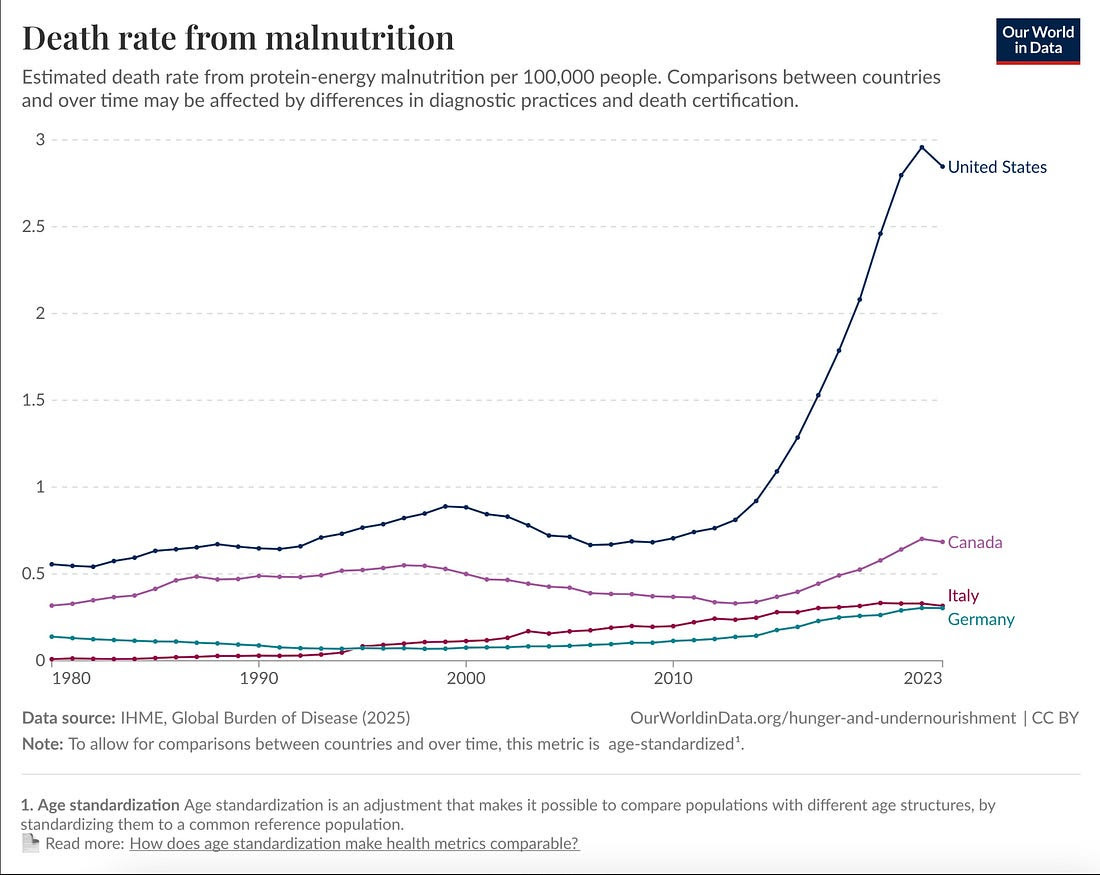
Via Adam Tooze/DougHenwood
Dignified daily life has supply chains. A Working Class Climate Agenda will eventually need to follow them. Insufficient attention to my pet issues are a very minor quarrel with an excellent piece of work. My concern is offered in the spirit of Morris’s own insistence: not art for a few, not freedom for a few, not dignified daily life for a few. For now, read the report. Share it, and work to make its agenda better yet.