

One of the joys of the newsletter world is that folk are genuinely kind to one another. I’ve learned how to do this from Errol Schweizer and Alicia Kennedy, and I’m keen to expand that circle of solidarity. Once a week, I’ll be encouraging readers here to check out some of the writers from whom I learn.
This weekend, five children died in a shack fire in South Africa. As the members of Abahlali baseMjondolo note, “Being poor means living close to death. The structural violence of impoverishment and abandonment eats at our lives.” This impoverishment generates trauma. In the piece below, Richard Pithouse recently compared organisers on the shores of the Atlantic and Indian Oceans, drawing on his own original research and a terrific piece in the New Left Review. If you find this useful, please do consider supporting his work with a subscription, as I do.
At the age of 19, Guilherme Boulos moved from the youth wing of the Brazilian Communist Party into the occupations run by the Movimento dos Trabalhadores Sem Teto (MTST). Trained as a philosopher at the University of São Paulo, he brought political theory into direct and productive encounter with both the materiality of struggles over land, debt and eviction, and with the lived experience and thinking of people in struggle.
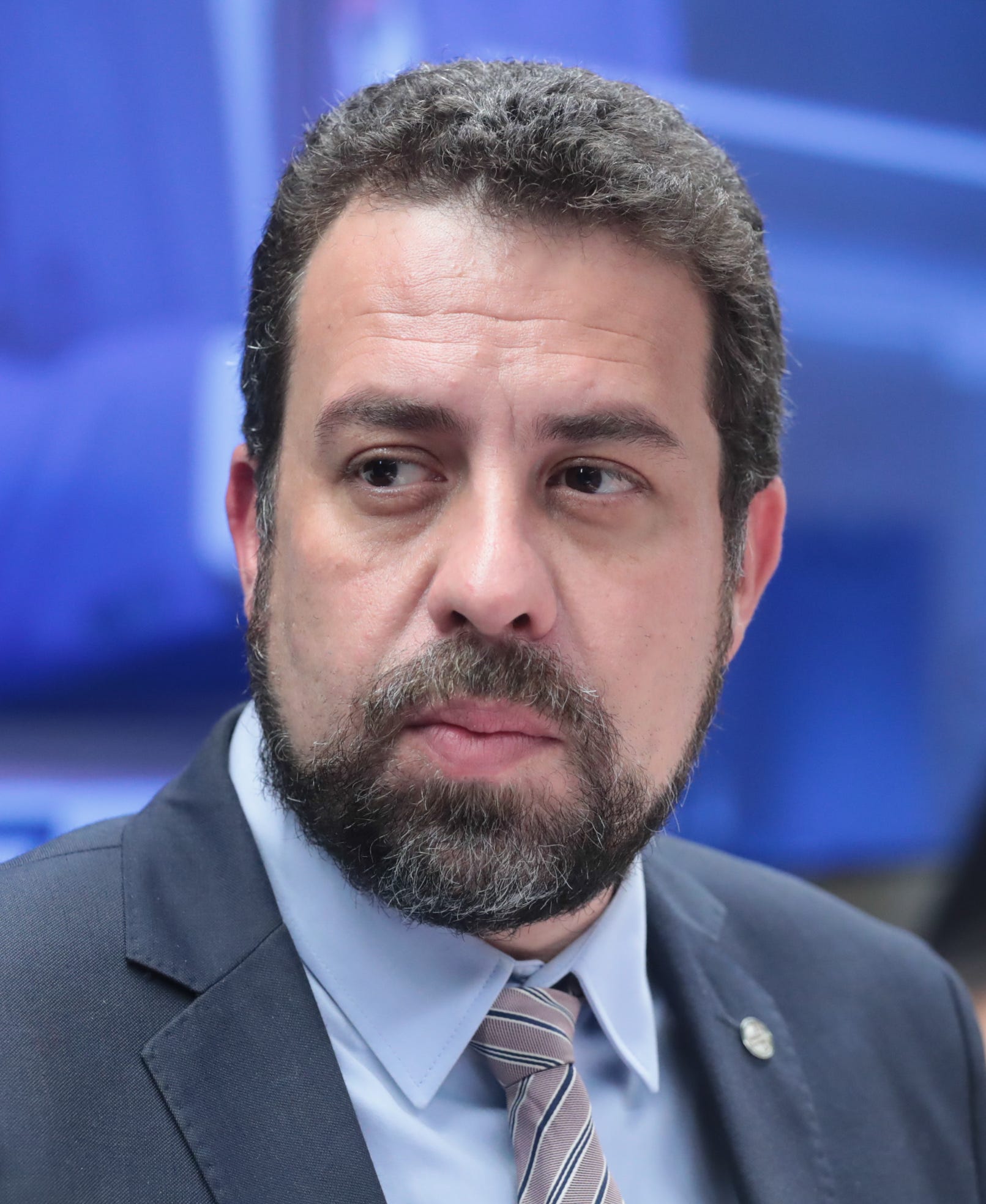
Bruno Spada/Câmara dos Deputados

The MTST identifies unused urban property — often land held by indebted speculators or abandoned buildings — and organises collective occupations that can involve hundreds or thousands of families. These occupations establish their own democratic structures for decision-making and the distribution of resources while negotiating with municipal and state authorities for regularisation of tenure or access to public housing programmes. Boulos became the movement’s national co-ordinator and primary spokesperson. From that position he framed the struggle not only as a demand for shelter, but as a claim to the city itself — for those whose labour sustains urban economies yet who are pushed to their margins. For Boulos, electoral politics must emerge from organised popular power and remain accountable to it.
In 2020, Boulos ran for mayor of São Paulo as the candidate of the Partido Socialismo e Liberdade (PSOL), reaching the second round with over two million votes before losing to the incumbent, Bruno Covas. He ran again in 2024, securing a similar number of votes. Both campaigns drew directly on the MTST’s organised base in the city’s peripheries. Housing, urban space and the material conditions of life in the peripheries were treated not as technical policy matters but as political questions at the centre of democratic life.
This interview in New Left Review, published in 2022, is paywalled. But here’s an important moment in which he discusses forms of solidarity and care that go beyond the material aspects of struggle.
I spent a month [in Argentina], during the upsurge of the piqueteros—a movement of the unemployed, organized territorially, a bit like the MTST. Their slogan was, ‘The barrio is the new factory.’ The piqueteros were among those responsible for the overthrow of three Argentine presidents and two interim ones within the space of a few months. I was in Argentina just after the Pueyrredón Bridge massacre in Buenos Aires, where two militants were murdered at a blockade. I went to a neighbourhood on the periphery of Buenos Aires where there was a meeting they called a ‘reflection group’. It was coordinated by two psychoanalysts who brought people together in a circle and created an environment for listening—listening to people who had never been listened to before. They had just lived through traumatic situations, like being made redundant and evicted from their homes; or they had lost their partners, or seen their families destroyed. I will never forget that: for the power, for the strength that was present there. It was a catharsis that brought forth all the experience of suffering, of humiliation, of every sort of oppression and violence that people had lived through. I left convinced of the potential of psychoanalysis for the transformation of people, of their bodies. And of the need for procedures like this to reach the base of society, the excluded, to help them take their destiny into their own hands, with the support of the community. It was a tool for those who couldn’t afford to pay for psychological treatment. I came back from Argentina and started studying psychoanalysis.
Another thing that intrigued me, when I went to live in an MTST occupation, was something that I heard said again and again, in different ways. I remember the first time, listening to a comrade who was coordinating a community kitchen. She said that this was a space for sharing, for coexistence, for taking root. It was the type of space that had been lost in the overwhelming dynamics of urban capitalism. In the occupation people talked, recounted their cases, their stories, explained how they had ended up there, took steps of their own. She said that, before coming to the occupation, she had been living with relatives, dependent on their hospitality. She was diagnosed with severe depression and ended up taking several psychiatric medications—she couldn’t even get out of bed. She was driven to the MTST occupation by economic conditions, the precarious situation in which she lived. But once there, she told me, ‘I threw the medicines away because I didn’t need them anymore.’ That might sound naive. But, no—at different occupations, from different people, I heard the same narrative.
Through study and research, I tried to understand what this meant. My master’s thesis in psychiatry is about the correlation between mental suffering, poverty and collective organizations. I could begin to understand, with psychoanalysis, how far situations of humiliation, of material and social deprivation, helplessness, unemployment, family breakdown, an environment of violence or loneliness, how all of this is linked to psychological suffering, especially depression. Depression does not only affect the middle class, far from it. It hits the dispossessed. Yet on the other hand, when these people feel part of a group, when they are no longer alone, when they feel important to others, acts of solidarity serve equally as acts of healing. Commitment and collective projects are good for people on a psychological level. There is no doubt that unemployment, homelessness, violence and humiliation are causes of psychological and subjective breakdown. And coexistence, bonds of community, can help rebuild subjectivities that have been ravaged by barbarism, by the urban dynamics in which people are isolated and lost in the middle of an anonymous crowd.
There are some striking resonances with a point made by S’bu Zikode in an interview published in the Boston Review in 2024.
The fact that your bones are those of a biological human only means that you have the skeleton of a person. It does not confirm your humanity. You may be a skeleton that is still in the process of building, that still needs ubuntu toward yourself, to others, to nature. A human being is incomplete if it is defined in isolation to others.
There is no emancipatory politics without listening to others. Some people will say it’s a skill. But listening is much deeper than that. It’s about being human, being human together. It’s an acknowledgement, an embrace of others. And it’s not just an embrace of others as you see them, but an embrace of how they come through the world to this moment, their suffering, their hopes, their views, how they breathe, and how they express themselves.
As a leader, you have to listen to people very carefully. You have to learn from them. Every time you listen to another person you have the opportunity to learn from them. Every person is a world on their own. You can’t say that you are on the side of the people, that you are with the people, if you don’t take them seriously as people with ideas of their own. We build our humanity through listening.
Most of the attempts to build movements in South Africa over the last thirty years have been dismal failures. There are a variety of reasons for this, including the fact that a range of actors effectively see oppressed people as bodies to be mobilised rather than as people.
What Boulos encountered in Argentina, and what he later recognised in the occupations of the MTST, speaks to something that is also central in Zikode’s thinking: that people must be met in the fullness of their humanity and not only as people suffering material and political lack.
For both Boulos and Zikode, both of whom have built and led movements of the urban poor of planetary significance, listening – listening as recognition - is fundamental to politics. When people are invited to speak, to narrate, to interpret their own suffering and to do so in solidarity with others, something shifts.
They both understand that collective organisation is not only a vehicle for material redistribution. It is also a space in which wounded subjectivities can be healed and reconstituted.
Support Richard Pithouse’s Substack by subscribing here.