

Beneath Mexico’s Yucatán Peninsula there is a waterworld. The cenotes — a Spanish word derived from the Mayan dzonot, meaning abyss — form a network of underground caves and rivers that run for thousands of miles through limestone, connecting the forest to the sea. They are the region’s only source of fresh water. They shelter species found nowhere else on earth. For Maya people, the caves are portals between the living world and the underworld, where the boundary between the sacred and the material is soluble in cavewater.
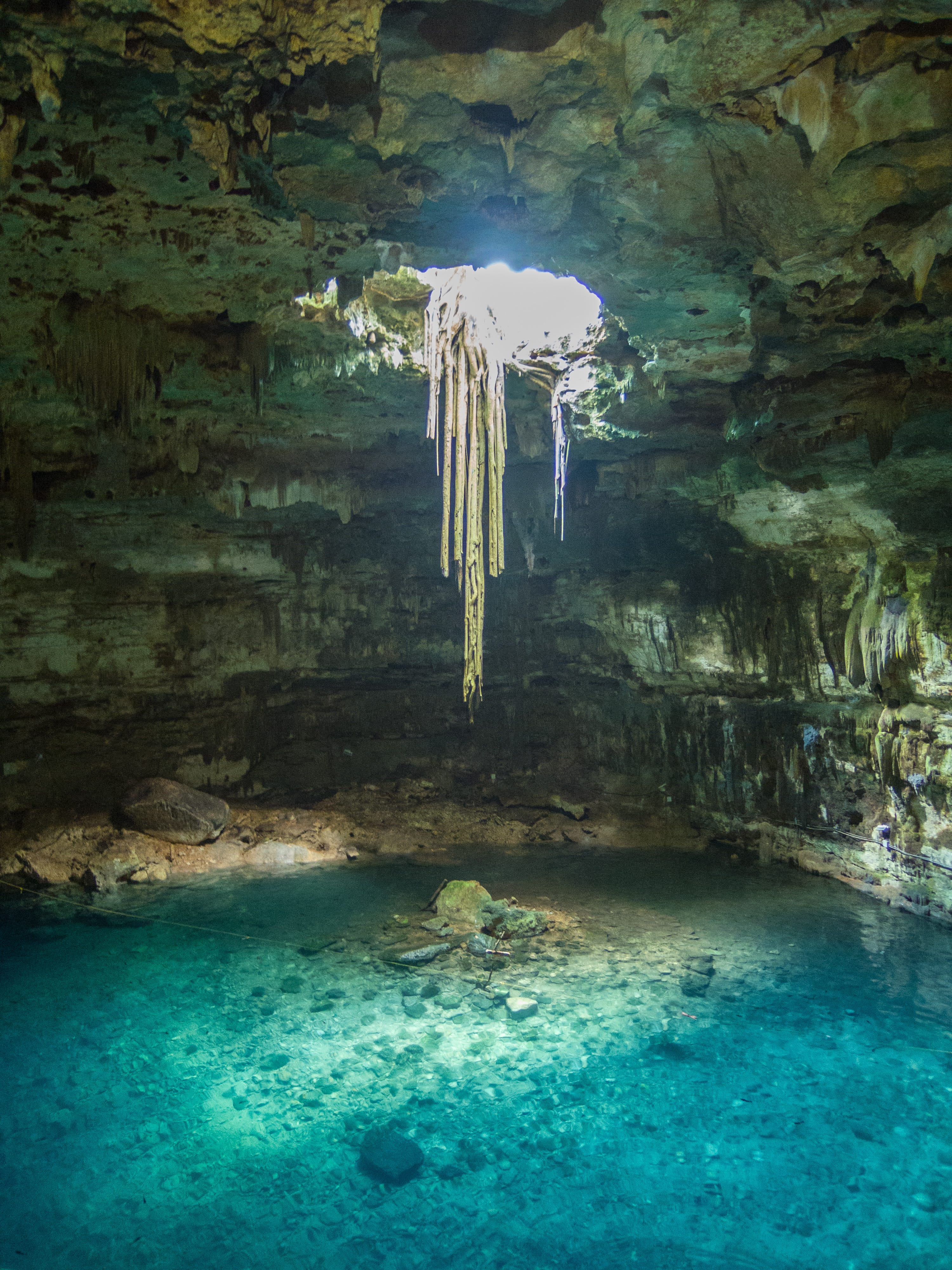
dronepicr/Wikimedia

Today, fifteen thousand steel and concrete pillars have been driven into that limestone to support a railway.
A billion-dollar coastal real estate development called Ciudad Maderas is threatening a thousand hectares of fragile habitat and Indigenous fishing grounds. Sewage and agricultural runoff are poisoning the aquifer. The caves are being punctured, and the water that millions of people depend on is haemorrhaging out.
And the people defending those caves are being dragged into courtrooms.
My friend Sergio Oceransky is the director of the Yansa Foundation, which provides free legal, technical, and organizational support to Maya communities in the Yucatán — in Ixil, Kinchil, Dzitnup, Molas, Sisal — who are fighting to protect their territories. His legal work helped secure a court-ordered suspension of the Ciudad Maderas megaproject. For this, he has received death threats and been the target of a sustained defamation campaign.
On April 6, Sergio traveled voluntarily to a courthouse in Tonalá, Jalisco, to respond to fabricated extortion charges — brought by a person he has never met, in a state where he has never lived. He carried a printed court order, an amparo, that explicitly prohibited his arrest. The prosecutors read the order and arrested him anyway. He was held incommunicado in a cell inside the courthouse. Only after an international outcry was he released that afternoon.
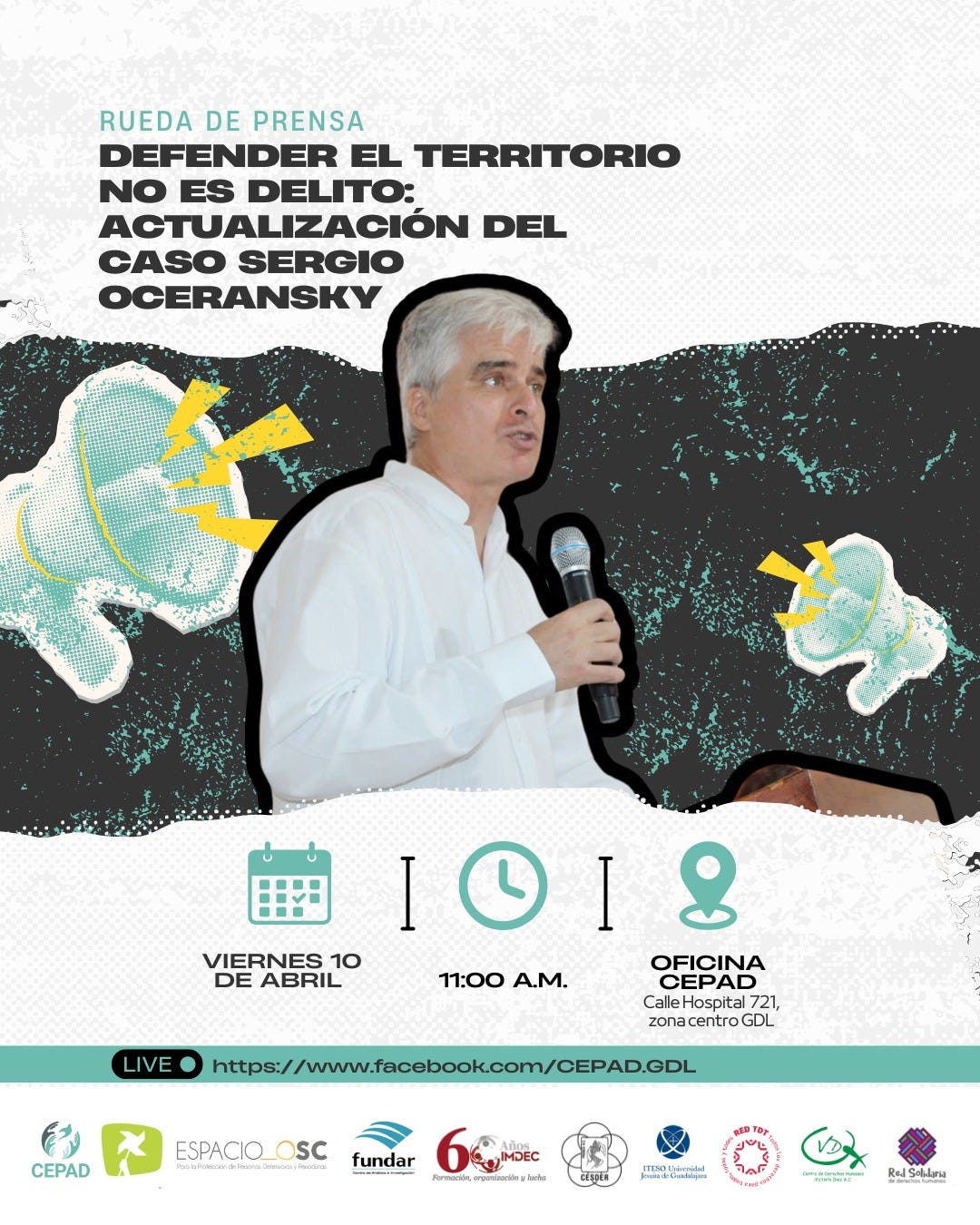
On Sunday April 12, the Jalisco case collapsed. A judge ruled there was insufficient evidence to bind Sergio over for trial. The process, marked by what his legal team describes as numerous violations and irregularities, failed to meet the minimum evidentiary standard.
But the story isn’t over. The risk of extrajudicial action against Sergio has increased since the ruling. Today, Tuesday, April 15, a second hearing begins in Yucatán, this time on a complaint filed by members of the Abimerhi and Millet families against Sergio and members of the Maya community of Ixil. The summons arrived hours after his release from the Jalisco detention. It’s part of a pattern of coordinated legal harassment across state lines, designed to exhaust, isolate, and ultimately remove him from his work.
There is a Mayan legend about the toh bird — the turquoise-browed motmot — that lives in the cenotes. The toh was once the most beautiful bird in the forest, and it knew it. When the rain god Chaac warned all the birds to build shelters against an approaching storm, every bird got to work — except the toh, which figured its beauty made it invulnerable. The storm came. The toh scrambled for cover and found a burrow, but its magnificent tail was left exposed and was destroyed. When the storm ended, the toh strutted out, still proud, not realizing what it had lost until the other birds started laughing. From that day on, it has lived in hiding, flying through the darkness of underground caves.
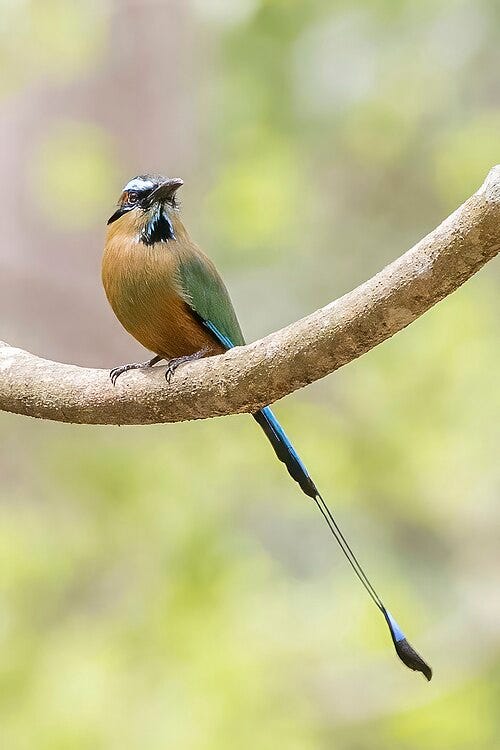

The Mexican composer Gabriela Ortiz has written a cello concerto about all of this. It is called Dzonot, and it is — apologies — pure cinema. Listen to it and tell me you can’t hear exactly what she’s writing about in each of the four movements: “Luz vertical” (Vertical Light) — the way sunlight penetrates the cenote caves, striking the water; “El ojo del Jaguar” (The Eye of the Jaguar) — the cello becoming the body and voice of the big cat; “Jade” — a meditation on the underground rivers, building toward a passage of mechanical, insistent rhythmic motifs that represent industrial destruction; and “El vuelo de Toh” (Toh’s Flight) — the bird’s free, nimble flight, a hope that it will not lose its home.
The full album, Yanga, is on YouTube here. Start with “Luz vertical” — Track 2 — and give yourself thirty-one minutes.
Ortiz grew up in Mexico City. Her parents were founding members of Los Folkloristas, the legendary Mexican folk ensemble, and she learned charango and guitar playing alongside them before studying composition in Mexico City, Paris, and London. I heard this piece a couple of weeks ago in the studio of Graham Reynolds. Perhaps it’s not surprising that he’s a fan; they’re both at the frontier of percussion. Dzonot calls for 29 percussion instruments, including waterphones, Tibetan tingsha bells, a small tin can, and a kenong.
The cellist Alisa Weilerstein, who premiered the piece with the Los Angeles Philharmonic under Gustavo Dudamel, has called it one of the hardest concertos she has ever played, and has said plainly: “I think she’s a genius.” Ortiz has now won Best Contemporary Classical Composition at the Grammys two years running — the only composer ever to do so.
When Ortiz accepted the Grammy for Dzonot in February, she said:
This piece is also a reflection on a painful contradiction: places of deep historical, sacred, and ecological importance are being severely damaged by pollution and unchecked tourist development. Through music, I wanted to honor their beauty and resilience, and at the same time raise awareness of what is at stake.
She dedicated the award to the protection of the sacred waters. Sergio is one of those doing the protecting.
Listen to Dzonot. Ortiz wrote detailed program notes for the LA Phil here. And then, if you can, follow Yansa on Facebook and join their press conference. As I said when I started writing here, the three things that change the world are art, friendship, and witness. You can enjoy Ortiz’s art, and although Sergio mightn’t be your friend, your witnessing can help keep him, and the communities for which he works, safe.
Raj, I hope you were listening to Dzonot as you wrote. We will continue to witness, befriend, and create art.